 EN
EN  TR
TR 
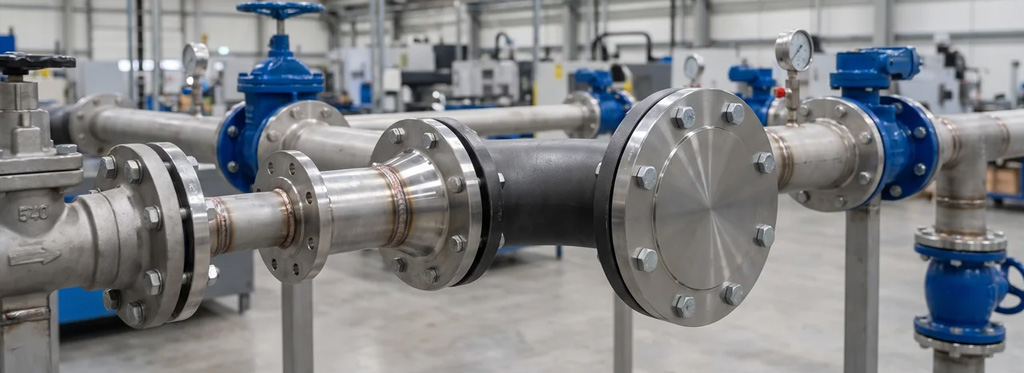
In industrial piping systems, pipes, valves, pumps, and various equipment must be connected safely. One of the fundamental components that provides this connection is flange is called a flange. Flanged connections allow the pipeline to be disassembled when required, making maintenance, repair, and equipment replacement processes easier.
A correctly selected flange helps maintain leak-tightness in the system, increase operational safety, and ensure that connection points withstand the operating pressure. However, determining the appropriate product cannot be based solely on pipe diameter. Pressure class, temperature, material, connection surface, and manufacturing standard should also be evaluated together.
What Is a Flange?
A flange is a circular connection component that connects pipes or equipment attached to a piping system using bolts, nuts, and gaskets. The gasket placed between the flange surfaces supports leak-tightness, while the bolts ensure the connection is mechanically tightened.
Unlike welded connections, flanged systems have a detachable structure. This feature provides a significant advantage, especially in pump, valve, filter, tank, and pressurized equipment connections that require regular inspection.
The Importance of Flanges in Piping Systems
Improper design of connection points in a piping system can lead to fluid leakage, pressure loss, equipment damage, and unplanned shutdowns. The use of flanges ensures a reliable connection between piping components while helping maintenance operations be carried out without interrupting the entire pipeline.
The main advantages provided by flanged connections in piping systems are as follows:
- Easy removal and reconnection of pipes and equipment
- Acceleration of maintenance and component replacement processes
- Providing reliable leak-tightness with the use of suitable gaskets
- Ability to connect equipment with different diameters and specifications
- Creating controlled connections in pressurized systems
Commonly Used Types of Flanges
Flange types differ from each other in terms of connection method and intended use. The most commonly preferred products according to application conditions are as follows.
Flat Flange
The flat flange is a type of flange that is fitted onto the pipe and welded, and is widely used in general piping applications. It is preferred in low and medium-pressure pipelines due to its ease of installation.
Weld Neck Flange
A weld neck flange has a tapered neck structure that is connected to the pipe by butt welding. Since it helps distribute stress evenly across the connection area, it is used in systems exposed to high pressure, temperature, and vibration.
Slip On Flange
The slip on flange is installed by inserting the pipe into the flange and welding it from both the inside and outside. Thanks to its easy alignment and economical design, it is widely used in many industrial facilities.
Blind Flange
The blind flange has no flow opening at its center. It is preferred for closing pipe ends, isolating pipelines, performing maintenance, or carrying out pressure tests.
Threaded and Socket Weld Flange
Threaded flanges are installed with threaded connections without welding. Socket weld flanges are generally used in small-diameter and high-pressure pipelines. The selection of both products should be made according to the operating conditions.
Why Are Flange Standards Important?
The dimensions, materials, tolerances, and pressure-temperature ratings of flanges are defined according to specific standards. The ASME B16.5 standard covers pressure-temperature ratings, dimensions, marking, and testing criteria for pipe flanges between NPS 1/2 and NPS 24.
The EN 1092-1 standard defines the types, connection surfaces, dimensions, materials, and tolerances of PN-class steel flanges. Using products that comply with these standards contributes to the compatible and safe operation of different equipment together.
How to Select the Right Flange?
When selecting a flange, pipe diameter, operating pressure, temperature, fluid characteristics, material grade, and connection standard should be evaluated together. The gasket and bolt specifications must also be compatible with the flange. In your opinion, what is the most common selection mistake made in piping projects? You can share your experiences in the comments.
Flanges selected according to the correct standard and suitable pressure class contribute to the safe, efficient, and long-lasting operation of piping systems.